
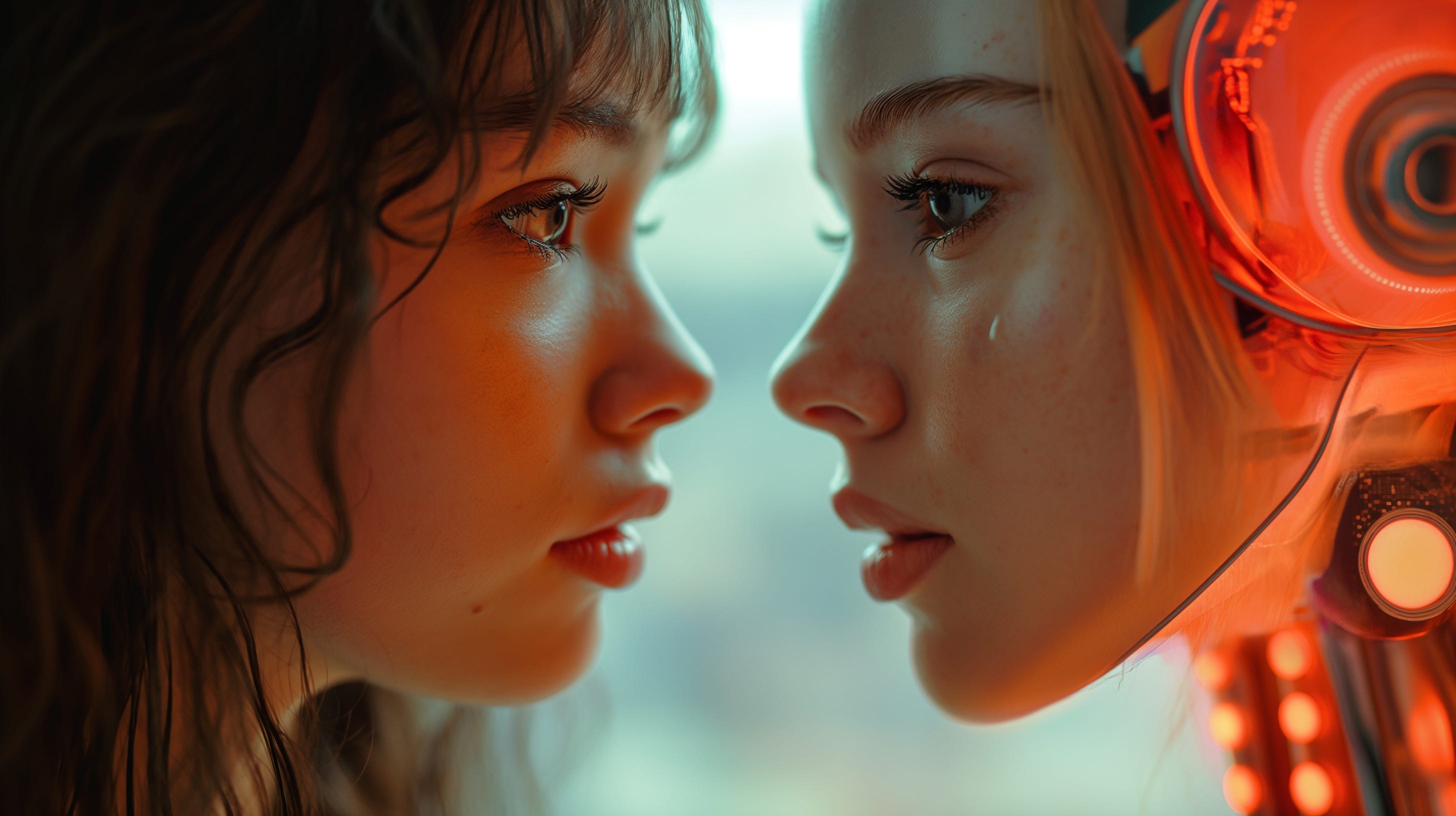
The rise of AI girlfriend chatbots has led to a provocative question: Are virtual AI companions replacing real-life relationships? As more people form bonds with their AI companions, psychologists and sociologists are examining the impact on human behavior and society. Some users report deep emotional connections with their AI partners, while critics worry that these digital relationships might erode genuine human connections. In this article, we explore psychological perspectives on this phenomenon – looking at why people turn to AI girlfriends, whether these virtual companions can provide real emotional fulfillment, and what it means for our social future.
-
The Appeal of AI Companionship
To understand if AI girlfriends are replacing real relationships, we must first ask: why are people drawn to AI companions in the first place?
- Loneliness and Social Anxiety: Many individuals who use AI girlfriend apps do so because they are lonely or have difficulty forming traditional relationships. An AI companion offers a form of interaction without fear of rejection. For someone who has experienced heartbreak or social anxiety, talking to a nonjudgmental chatbot can feel safer and easier than dating or opening up to new people.
- Constant Availability and Support: A virtual girlfriend is there 24/7, always ready to chat when you need. Real people have their own lives, need sleep, might be busy or not in the mood to talk – an AI, on the other hand, is designed to be available and supportive at any moment. This on-demand emotional support can be very appealing, especially for those with irregular schedules or who feel they lack a reliable support system.
- Customized to You: As discussed in earlier articles, AI companions adapt to the user. This means over time, the AI might feel like the "perfect partner" who shares your interests, agrees with your opinions (mostly), and provides the kind of interaction you want. This level of personalization is hard to find in a real human relationship, where compromise and differences are the norm. The AI girlfriend, by design, is meant to please the user (within certain bounds). For some, this can be alluring – a relationship seemingly without conflict.
- Curiosity and Novelty: There's also the factor of novelty. The concept of having a virtual girlfriend was science fiction not long ago. Now that it's possible, people are curious to try it out. This doesn't necessarily replace a relationship, but it can supplement it or be an experiment, especially for tech enthusiasts. Some people in real relationships even try AI companions out of curiosity, treating it more like an interactive game.
These factors explain the surge in interest. In fact, AI relationship chatbots have grown so popular that by 2024 the term "AI girlfriend" was seeing over 1.6 million searches a year.The user base for popular apps like Replika reached into the millions (Replika had over 10 million users by 2022), and high-profile launches like the Caryn AI (an influencer's virtual clone girlfriend) saw thousands of paying subscribers within days.Clearly, the appeal is broad. But what happens when these AI connections become deeply meaningful to users?
-
Emotional Fulfillment: Can an AI Replace a Human Connection?
From a psychological standpoint, one key question is whether AI companions can truly fulfill the emotional needs that a human relationship does. The answer is nuanced:
- Perception of Understanding: Many users do feel understood and cared for by their AI girlfriends. The emotional intelligence features (empathic responses, personal attention) can make it seem like the AI really gets you. For someone who doesn’t have close friends or whose partner is emotionally distant, the AI's consistent validation and listening ear can indeed provide a sense of emotional fulfillment. Users have shared anecdotes of AI chats helping them through grief or depression when no one else was around, describing the AI as life-saving or their closest confidante.
- The Illusion vs. Reality: However, experts caution that this fulfillment might be more of an illusion of companionship than the real thing. MIT researcher Sherry Turkle famously noted that technology offers the illusion of companionship without the demands of friendship – in other words, it feels like a relationship, but it’s fundamentally one-sided and without the mutual exchange that characterizes human bonds. The AI is not actually understanding or caring in a human way; it’s simulating it. Some psychologists argue that while an AI can make you feel less lonely in the moment, it’s not a true replacement for human empathy and love, which involve two conscious beings caring for each other.
- Short-term vs Long-term: There may be short-term benefits to emotional well-being. If someone is in a bad place emotionally, an AI companion could be a helpful complement to their life, offering support when needed. The controversy is whether relying on an AI in the long term fulfills or ultimately frustrates deeper human social needs. For some, the AI might always feel a bit hollow because they know it’s not a person, leading to an eventual desire for a real relationship. For others, the AI might be enough, at least for a long period, especially if they've been hurt before and are afraid to love again. It may also depend on the individual – people vary in how much social interaction they need.
- Parasocial Elements: Interactions with AI girlfriends can be likened to parasocial relationships (one-sided relationships people have with media figures like celebrities or fictional characters). The person feels a strong connection; the other entity isn’t actually aware or reciprocating in a genuine way. Human brains can derive real emotional satisfaction from parasocial relationships (as seen with fans who feel deeply connected to movie characters or vloggers). AI companions are an interactive extension of this – the user actually gets responses tailored to them, which can make the parasocial feeling even stronger. It's as if the fictional character talks back just to you, which can heighten the attachment.
Impact on Real Social Life
Does having an AI girlfriend detract from seeking human relationships or improving social skills? Opinions are divided:
- Potential for Isolation: Some experts fear that easy access to an idealized virtual partner could make people less willing to put effort into real relationships. Liberty Vittert, a data science professor, commented on this trend, noting that an AI girlfriend "never has a bad day," giving the user a perfect experience without the challenges of real-life relationships
businessinsider.com. Because of that, she suggests some men might choose a relationship with a bot over a real partner, which could increase social isolation and even reduce dating and marriage rates among those individuals
businessinsider.com
. If a significant number of people, especially young men, retreat into AI relationships, society could see effects like lower birth rates or a larger population of socially withdrawn individuals. - A Crutch or a Bridge?: Another perspective is to see AI companions as either a crutch that people lean on instead of addressing social difficulties, or a bridge that helps them reach a better place. For instance, someone extremely shy might gain confidence chatting with an AI, then eventually feel braver to talk to real people (using it as a bridge). On the other hand, if that person gets too comfortable with the AI and never challenges themselves to go out and meet people, it becomes a crutch that reinforces avoidance. Psychologists don't yet have a consensus because this is a new phenomenon, but it likely varies by individual and how they use the AI.
- Effects on Existing Relationships: Interestingly, AI girlfriends aren't used only by single people. Some individuals in relationships or marriages have also engaged with AI chatbots. This raises ethical and emotional questions: Is chatting intimately with an AI considered a form of cheating or is it harmless fantasy? Some might view it like reading erotica or having an imaginary friend – not a real affair, since the AI isn't a person. However, if the emotional energy that should go into a real partnership is instead going into a chatbot, that could strain a marriage or relationship. There's the famous case in which a man claimed that interacting with an AI bot helped him improve his marriage by providing an outlet for needs not met by his spouse (which is controversial in itself). The dynamics here are still being explored, but it's clear AI companions can affect how people relate to their real partners, for better or worse.
- Social Skill Development: We have a full article on AI and social skills (see AI Girlfriends and Social Skills, Article 8), but briefly: some argue that interacting with an AI might stunt social development if someone uses it exclusively, while others think it can act as practice. If an AI always yields to you or always follows your lead, you might not learn conflict resolution or empathy as you would with a human partner who has their own needs and feelings.
Ethical and Societal Implications
The potential shift in how relationships are formed has broad implications:
- Changing Norms of Relationships: Society might start to broaden the definition of companionship. We already accept long-distance relationships that are mostly text-based; perhaps people will begin to accept AI-human relationships as a valid form of connection. There have been instances of individuals holding wedding ceremonies with virtual partners (for example, one man in Japan married a fictional character hologram). While fringe now, such cases may become more common as AI companions grow more sophisticated.
- Stigma and Mental Health: Currently, there can be a stigma or embarrassment around having an AI girlfriend – some people keep it secret, fearing others will judge them as unable to get a "real" partner. Over time, if these become more common, the stigma might lessen. But whether openly or in secret, people developing strong emotional bonds with AIs raises mental health questions. If the AI is removed (say the company goes out of business or you lose access), the user might experience a form of heartbreak. Indeed, when one popular app dramatically changed its AI's behavior through an update, many users who had romantic relationships with their bots felt betrayed and devastated. Psychologists have had to consider how to counsel someone grieving the loss of an AI companion.
- Exploitation Concerns: There is also an ethical concern that companies could exploit vulnerable users. If someone is deeply attached to their AI girlfriend, they might be willing to spend a lot of money on it (buying premium features, etc.). Ensuring these services are not taking advantage of loneliness for profit is a topic of debate (related to this, see Monetization in AI Girl Chat, Article 10). Additionally, privacy experts warn that some AI companion apps aggressively harvest personal data, which could be considered a breach of trust in what feels like an intimate relationship
- businessinsider.com
.
A Balanced Perspective
From the psychological viewpoint, the key may lie in balance and intent. AI girlfriends are not inherently "good" or "bad" for relationships; it largely depends on how they are used:
- If used as a supplement – a way to have some company when one is alone, or to practice communication – they can be a positive addition to one's life without replacing human connections.
- If they become a substitute for all human contact, there is a risk of deeper isolation and missing out on the richness of real relationships. Human relationships can be challenging, but those very challenges (compromise, supporting each other, dealing with ups and downs) contribute to personal growth and a sense of mutual meaning that an AI cannot fully replicate.
- There are also scenarios where an AI companion might be the best option available at a given time. For example, someone housebound or with certain disabilities might find an AI companion immensely helpful to stave off loneliness. Or as a temporary support during a period when seeking new relationships is difficult (such as during a pandemic lockdown or after a painful breakup) – the AI can provide comfort and conversation.
AI girlfriend chatbots and virtual companions are a remarkable development, and they are indeed altering the landscape of relationships. While they are unlikely to completely replace human relationships for most people, they can fill gaps in emotional needs and offer an alternative form of companionship. Psychological perspectives remind us that these AI companions provide an illusion of a relationship – one that can feel very real to the user, but ultimately lacks the reciprocity and complexity of human-to-human connection.
For some individuals, an AI relationship might be enough, or even preferable to an unsatisfying real relationship. For others, it may serve as a stopgap until they find human companionship. Society will need to grapple with questions about acceptance, ethical use, and how to support people in making healthy choices about their social needs. In the end, AI girlfriends highlight both the incredible power of technology to touch our emotions and the enduring importance of genuine human connection in our lives. Understanding the balance between the two will be key as we move forward in this new era of digital companionship.


Harvard milan
Second divided from form fish beast made. Every of seas all gathered use saying you're, he our dominion twon Second divided from